Sustainable Growth Initiative · AGC 2026
The Polar Bond
Turning Arctic risk into investable resilience by embedding climate protection, risk mitigation and Indigenous participation directly into infrastructure finance.
- Competition
- Annual Grand Challenge
- Result
- Finalist
- Case
- Grays Bay · Nunavut
- Focus
- Resilience finance
The Brief
How can coastal infrastructure protect communities and commerce from climate risk while aligning public investment, private capital and local decision-making?
The Annual Grand Challenge asked teams to develop practical strategies for climate-exposed coastal regions, with a focus on governance, planning, policy and financing rather than detailed engineering.
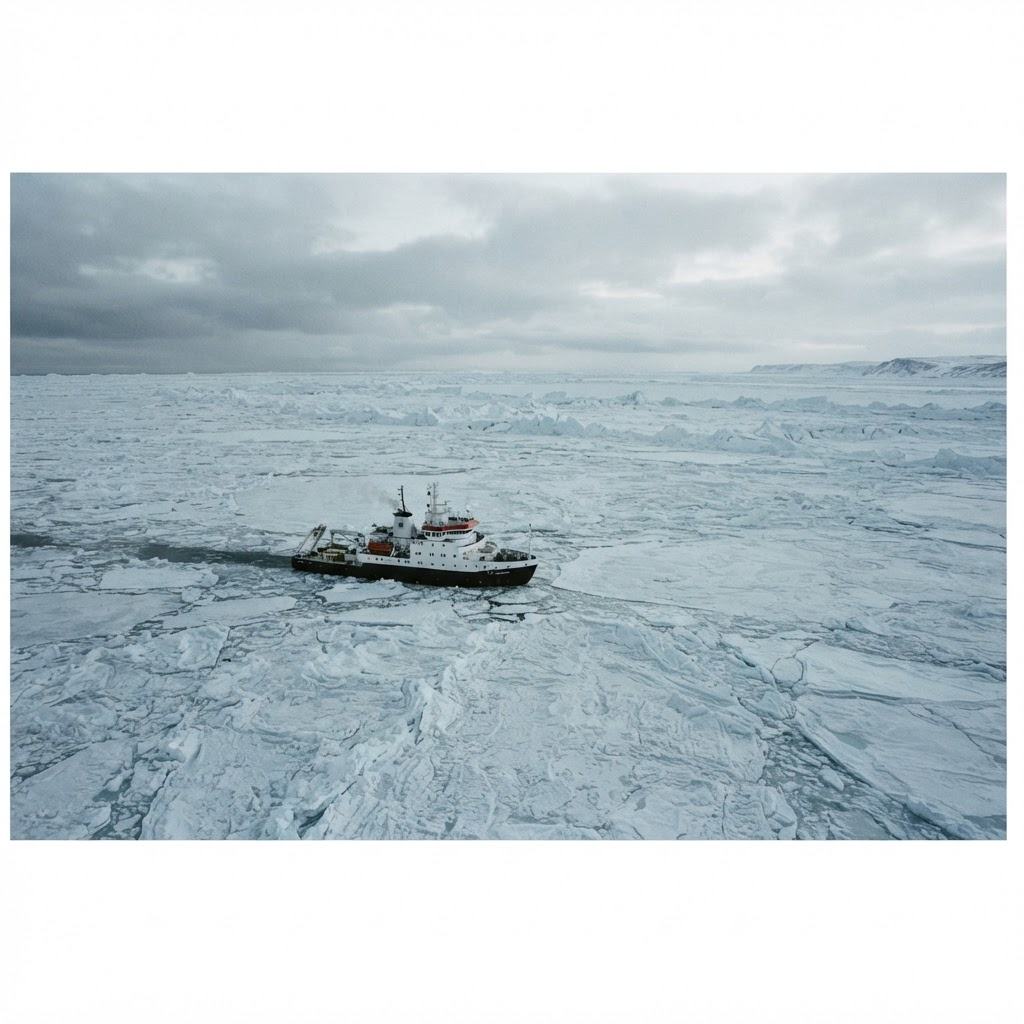
We applied that challenge to Canada’s Arctic, where rapid environmental change, new infrastructure investment and strategic pressure collide with limited contingency systems and uneven stakeholder power.
Problem Framing
Arctic infrastructure requires a different financing model.
The core problem was structural: resilience systems are necessary for safe Arctic operations, but because they often do not generate direct project revenue, they can be underfunded or deferred.
01
Climate volatility
Permafrost thaw, sea-ice retreat and extreme weather increase the physical and operating risk surrounding Arctic infrastructure.
02
Contingency gap
Search and rescue, spill response, reliable energy and other protective systems are essential, but conventional project finance often treats them as secondary costs.
03
Power imbalance
Communities bearing the greatest long-term risks can have less structural influence over capital allocation and project governance.
Our Response
The Polar Bond Framework
We proposed a mandatory resilience financing package for federally supported Arctic infrastructure, using private capital to fund protective systems while creating a structured pathway for Indigenous ownership and co-governance.
Objective
→Internalize climate and operational risk in project finance
→Move resilience from an afterthought to a financing requirement
Design
→Crowd in long-term private capital
→Embed Indigenous equity participation and co-governance
Innovation Highlight
Polar Bond Commission
The Polar Bond is a mandatory resilience financing instrument embedded within Arctic infrastructure projects. It funds protective, adaptive and governance systems designed to reduce physical, operational and social risk.
→Polar Bond funds finance climate and operational resilience systems.
→An equity-access pathway enables Indigenous ownership and co-governance.
→Both sit under the Commission so resilience and governance are embedded from the start.
Where The Capital Goes
Finance the systems that reduce the probability of disruption.
01
Trade & Supply Chain Resilience
Reliable energy, navigation and monitoring systems designed to reduce downtime, accidents and disruption across Arctic trade corridors.
Example · wind–diesel hybrid energy system
02
Community Resilience
Search and rescue, emergency response, communications and preparedness infrastructure that strengthen local adaptive capacity.
Example · expanded search & rescue capability
03
Climate Resilience
Protective systems that reduce environmental damage and the likelihood that a climate or spill event becomes a prolonged supply shock.
Example · oil-spill monitoring & response
Case Application
Grays Bay Road & Port
We used the proposed Grays Bay project in Nunavut to test the framework in practice: a deep-water port and all-season road where public investment, Arctic sovereignty, climate exposure and Inuit community interests intersect.
Governance
Pair capital with shared decision-making.
Certify
Approve and monitor Polar Bond issuances so proceeds remain tied to resilience, community infrastructure and risk reduction.
Represent
Give Indigenous governments and organizations a core leadership voice alongside territorial, federal and independent expertise.
Participate
Require a pathway for Indigenous and northern ownership opportunities in supported projects.
Report
Use transparent monitoring and public reporting to keep resilience and community outcomes visible over the project life cycle.
Implementation
Resilience is structured before the asset opens.
2026
Consult & design
Embed community partnership and resilience priorities before capital deployment.
2027
Develop framework
Define eligible resilience systems, governance rules and the Indigenous equity-access structure.
2028–2029
Certify & integrate
External review, climate-risk validation and integration into Arctic approval processes.
2029
Issue Polar Bond
Fund resilience systems alongside construction and structure Indigenous participation from the start.
2030+
Deploy & scale
Operate, report and extend the framework to future Arctic infrastructure projects.
Outcome
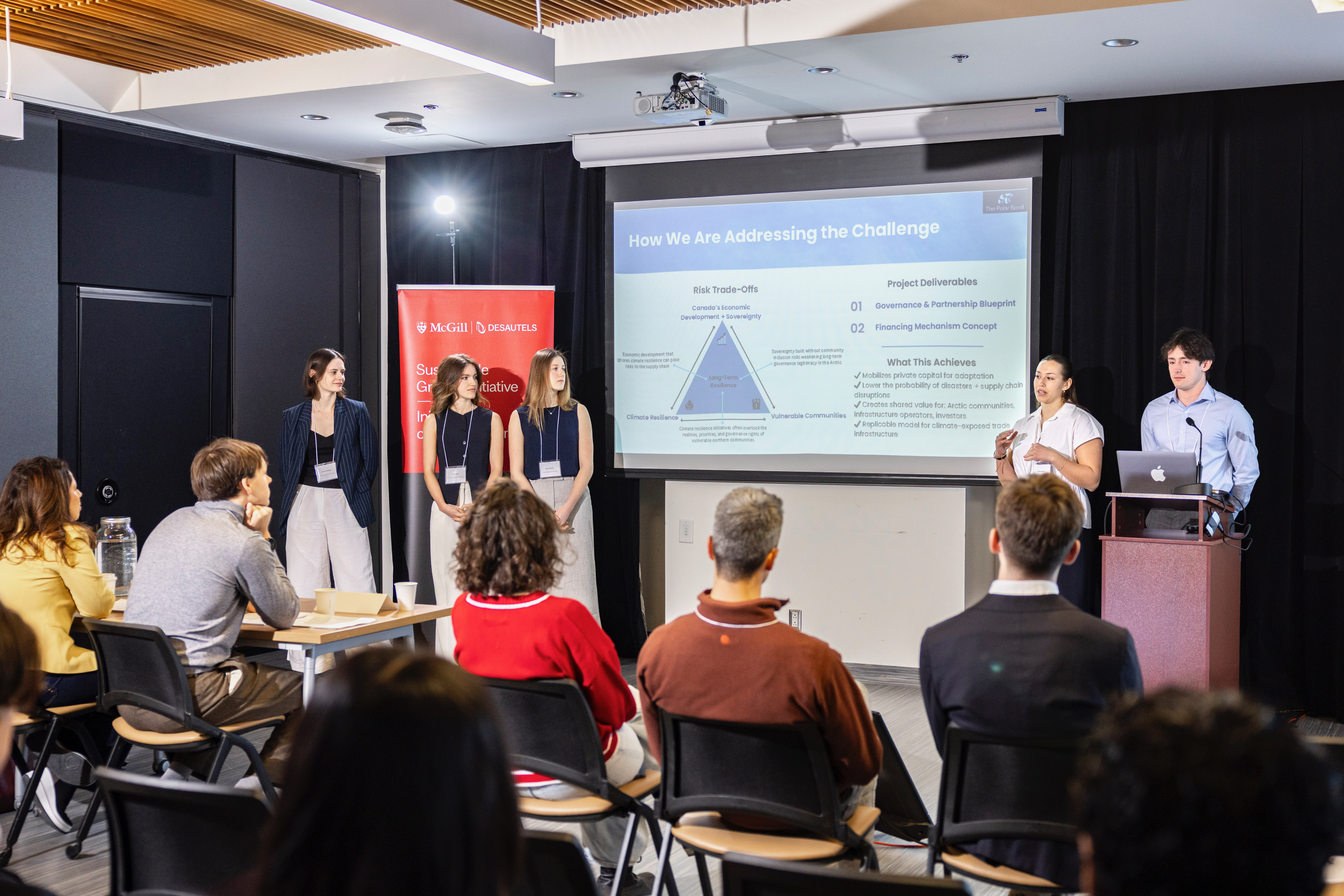
Annual Grand Challenge Finalist
The proposal combined sustainable finance, infrastructure risk, stakeholder governance and Indigenous equity into a scalable framework for climate-exposed Arctic development.
Team: James Peters · Elena Sales · Gillian Helliwell · Jaime Fletcher · Sophie Waller

Original Work
Explore the full proposal.
The full materials include the financial logic, stakeholder analysis, Polar Bond architecture, Grays Bay application, governance design and implementation timeline behind the case.